Blog
Field Work in The Gambia
July, 2025


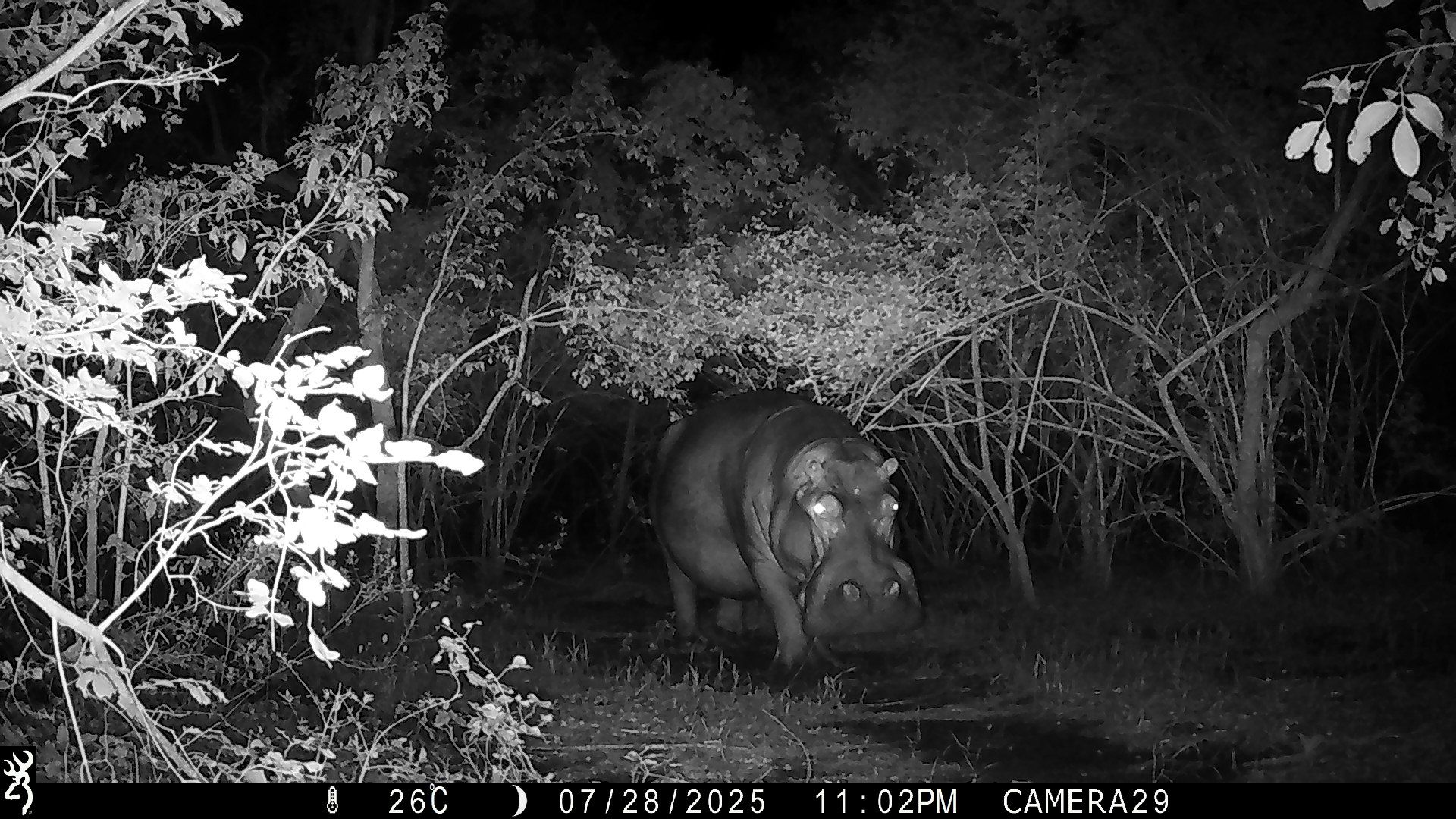
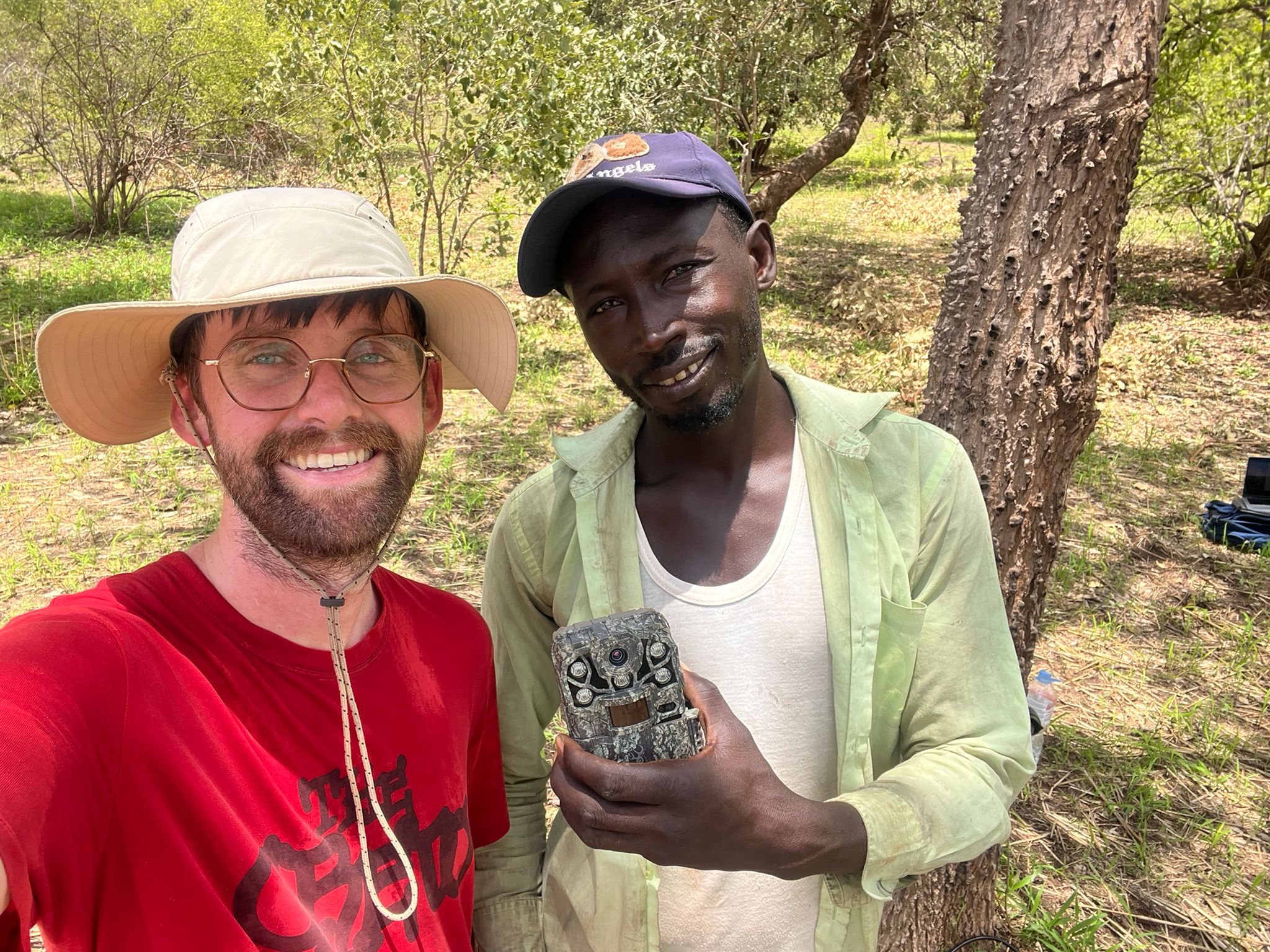
I travelled to The Gambia to deploy a network of camera traps to monitor wildlife. Our project is in collaboration with The MRC Unit at The London School of Hygiene and Tropical Medicine, and PhD students and scholars associated with a project called SENZOR. As I would find out time and time again, working with a locally based and respected organization like MRC-Gambia, makes all the difference in making sure everything goes smoothly. It is an exciting and rare opportunity to be able to work in an multidisciplinary project with scholars from other disciplines.I landed at Banjul airport and only had minimal issues in customs getting my haul of equipment and suspiciously large stache of AA batteries through the border. I spent the first few days in the main MRC campus in Fajara, where our team would slowly assemble and we would make sure to all coordinate our fieldwork together. Our team during this trip consisted of José a postdoc, and 3 PhD students aside from myself: Hellena, Saidal Ali, and Santi. Aside from me, everyone else was employed through the SENZOR project, an exciting interdisciplinary project consisting of several collaborating institutions across multiple nations.
Once all our maps, visual aids, and equipment was ready and we had met with the necessary officials on the coast. We used the first weekend to head up the Central River Region (CRR) where we would be conducting our research. It is about a 5-6 hour drive from the coast to the MRC field station in near the Walikunda village where we stay during field visits. Despite Santi’s best efforts, Santi’s car only made it about halfway, complicating the journey a but Luckily, Santi and our colorful driver, Yaya are both very resourceful and we were able to work it out how to get the car to a safe place. Crammed inside of one vehicle, we made the rest of the trip, without any incident.The next key step that we spent the following days in area doing were to contact the elders and village chief, in our focal village to make sure everyone understood our goals and felt comfortable with our presence and monitoring efforts in the village. We introduced ourselves, explained that we are interested in studying the ways their domestic animals may be getting sick, and then overviewed what we hoped to do in their village. Naturally, there were many questions about their privacy and how the monitoring would work. I showed them maps of where we hoped to put cameras and assured them, we would not be keeping images of people, if they were accidentally captured in an image. We also promised to get landowner permission for every camera we placed.The people we met with in the village were extremely welcoming and happy to collaborate with us. A large part of the goodwill afforded to me and my work was thanks to the long-term relationship Hellena has with the village we work in. Hellena, as an anthropologist, spends long periods of time in the villages, farming with people and truly getting to know everyone. After the meeting, Ansu, the deputy village chief (younger brother of the chief), was very excited by the project and volunteer to help me install and look after my wildlife camera traps.Ansu, is a very kind and good-natured man who put all of us at ease and made us all feel welcome. Luckily for us, he is also a very smart man and an experienced hunter who knows the bush, where we planned to place cameras, better than anyone.We set out into the bush as our team to begin placing cameras. The points where the cameras would be placed were predetermined by GIS within our sample design protocols, so we followed our trusty GPS to the locations.
But once we arrived at the locations, Ansu’s local expertise was invaluable for allowing us to place and orient the camera at locations with the highest potential for capturing mammalian wildlife. We left the cameras in the field for an initial testing period to make sure all the settings and locations were okay.During the period where we left the cameras to collect preliminary data, we spent the time working on Hellena, and Santi’s work. They had to complete their pilot studies in a village closer to our field station to prove viability of their work. We spent this time interviewing people and even spent an entire day following herdsmen to learn their daily routine. The daily life of a herdsmen is exhausting, starting from milking and herd care in the morning. Their day follows the herd around the bush and through fallow farmland. The cattle need to be carefully minded, making sure they don’t graze on the crops of other village members.When we returned to the cameras, we were surprised to find the abundance of images captured over such a short period. One particular oddity, was a broken strap we found. Upon reviewing the camera images, we found that this was a curious baboon that ripped the strap by yanking on it hard against the tree.The operation was a success, and the cameras are currently deployed and collecting data. It was a wonderful experience, and I am so grateful to everyone who welcomed me The Gambia. I look forward to collecting the full rainy season dataset!

